
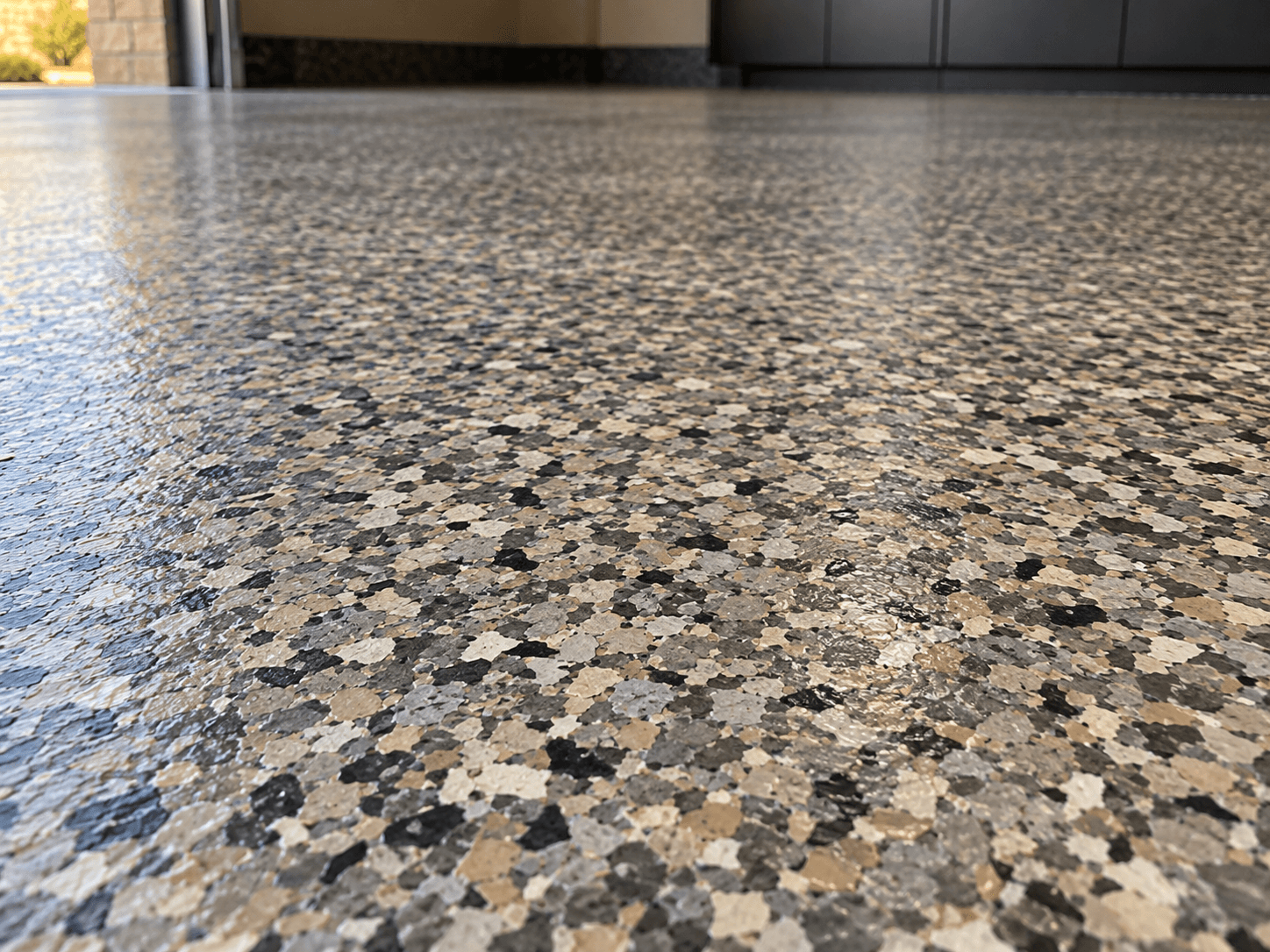
Start by removing loose dirt, then use the cleaner, tools, dilution, and rinse method approved for your installed coating. A full-flake floor is easier to look after when you know its topcoat and texture—not just its color. Avoid guessing with household mixtures or aggressive equipment. If the floor is new, follow its curing and cleaning instructions before the first wet clean.
What is a sensible routine for a coated garage floor?
Remove grit before wet cleaning. Sika’s maintenance guidance explains that dirt combined with wheel traffic can abrade a coating. How often you need to clean depends on actual use and debris, not a universal weekly schedule.
For a manufacturer-approved wet-cleaning routine, the general sequence is to remove loose soil, apply the approved solution, use suitable agitation, allow its specified contact time, remove the dirty solution, and rinse and recover water as instructed. Sherwin-Williams’ guide separates smooth and textured surfaces, so the tools suitable for one finish may not suit another.
- Read the care sheet before the first wet clean.
- Use clean equipment and the specified dilution.
- Keep dirty cleaning solution from being spread to the next area.
- Remove residue and leave the area dry before normal use.
Which cleaner should I use on an epoxy or full-flake floor?
Ask for a specific recommendation for the installed topcoat and type of dirt. An epoxy basecoat description alone is not enough to identify the surface you are cleaning. Do not assume a cleaner is suitable just because its label mentions concrete.
Keep the approved product name, dilution, and cleaning method with your project paperwork. If you want to change cleaners, confirm compatibility first rather than testing a stronger mixture across the whole garage. Follow the product label; do not mix cleaning chemicals.
Why does the floor feel sticky or look cloudy after mopping?
Residue or redistributed soil is worth checking before assuming the coating has failed. Sherwin-Williams emphasizes removing the cleaning solution and rinsing; Sika recommends clean equipment and changing dirty solution. Neither observation diagnoses your floor from a description alone.
Stop adding stronger products if the result is getting worse. Record what you used, its dilution, the tools, and what changed when the floor dried. Send photos and those details to the installer or product support contact. That is more useful than trying several additional cleaners and losing track of the sequence.
Can I use a pressure washer, steam mop, or abrasive pad?
Do not make those the default. Permission depends on the particular coating, cure state, equipment, and surrounding garage surfaces. Obtain written guidance before using pressure, heat, or aggressive scrubbing; limits for one commercial floor system should not be applied to every residential finish.
Sika cautions against unapproved strong chemicals and abrasive cleaning heads. For a textured flake floor, ask which brush or pad reaches the texture without damaging the finish. A more aggressive tool is not automatically a better cleaning method.
What about oil spills, tire marks, or a damaged patch?
Deal with spills promptly using the applicable product and spill-handling instructions. Avoid spreading the contamination across more of the floor. Sherwin-Williams specifically distinguishes greasy or oily floors from ordinary mop cleaning, so ask for the right method rather than treating every mark as dust.
Photograph an unfamiliar mark or damaged patch before attempting more aggressive cleaning. If you see lifting, peeling, or a physical change in the coating, request a review instead of assuming another cleaning cycle will fix it.
What care instructions should I ask for before installation?
A good planning conversation includes maintenance, not just appearance. Before approving a system, ask for the information you will need to use the garage and keep its finish clean.
- When may the floor be walked on, parked on, and wet cleaned?
- What is the actual topcoat and finish texture?
- Which cleaner, dilution, brush or pad, and rinse method are approved?
- What should be done for oil, tire marks, or unusual spills?
- Who should review a mark or damaged spot that routine cleaning does not resolve?
A full-flake floor is not maintenance-free. Match cleaning to the installed topcoat, remove dirt and residue, and get product-specific advice before using stronger chemicals, pressure, heat, or abrasive equipment.
Keep planning your project
NEXT STEP
Ready to talk about your floor?
Share a few details and photos for a ballpark estimate. Final recommendations depend on an assessment of your actual concrete.
Sources and further reading
We use these references for general guidance; product suitability and project pricing require a site-specific review.